
The best spots to experience the 'Eclipse of the century' in 2027

It's set to be another summer of memorable travel next year, and a total solar eclipse only adds to the excitement.
Save the date: on Monday, 2 August 2027, parts of Southern Europe and North Africa will see a 'once in a lifetime' solar eclipse grace the skies over the Mediterranean. Though there are always a few solar and lunar eclipses to watch out for each year, what makes this one stand out is the amount of time it'll be visible consecutively over dry land. Reaching the point of greatest eclipse above Luxor in Egypt, this incredible celestial event is predicted to be the longest land-based eclipse since 1973, and experts suggest there won't be another like it until 2189.
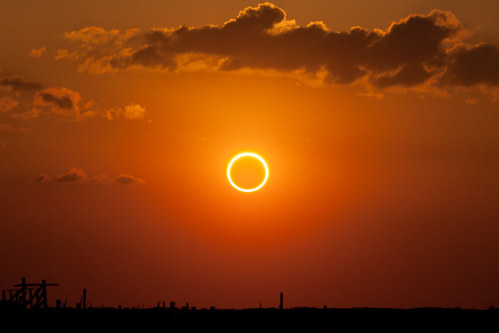
Our escorted tours aren't timed to the eclipse itself, so you won't be watching totality unfold from one of our groups. Nevertheless, the destinations in its path are some of our most popular, so we've picked five of the best places to see it and matched each to a Newmarket Holidays tour, so you can explore the region at your own pace, whenever suits you.
Why you need to see the total solar eclipse in 2027
Billed as the 'Eclipse of a lifetime', this celestial event will be the longest-lasting over dry land in more than 50 years, and the length of time it'll be visible for is set to be approximately three times the average in certain areas. In Luxor, spectators will experience more than six minutes of extraordinary midday darkness. At the same time, parts of Europe which fall just outside the path of totality, from Sicily to the Costa del Sol, will still see an impressive spectacle.
The best places to see the solar eclipse in 2027
1. Agrigento, Sicily
Despite largely falling outside the path of totality, Sicily is still set to witness Europe's deepest partial eclipse throughout the event, with 90–99% of the sun's surface shrouded by darkness. Towns on the south coast, Agrigento and Ragusa in particular, are set to see the greatest coverage. Cefalù, Palermo and Catania in the north will experience a slightly toned-down version of the eclipse.
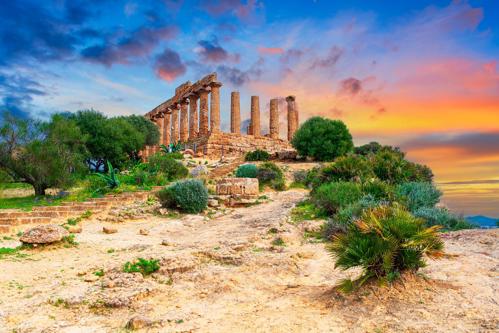
With characteristically pleasant weather in early August making visibility more reliable than most places on the continent, this delightful Italian outpost is a great choice for watching the eclipse unfurl if you're not too fussed about seeing the full totality. What's more, seeing its ancient temples and vast Mount Etna silhouetted by shadow promises to make viewing even more dramatic.
Want to see more of this Italian hotspot any time of year? Our Classic Sicily, Etna & Taormina tour is a great way to explore the island.
2. Valletta, Malta
Another option which brushes the path of totality is Malta. Much like Sicily, this idyllic island nation and neighbouring Gozo will see dimmer skies with a deep partial eclipse rather than complete darkness. That being said, Malta's position on the Mediterranean and its numerous harbour towns make it stand out for another reason entirely. Though visitors may not see the totality on dry land, local captains and cruise companies are already offering chartered sailings to view the eclipse from the sea.
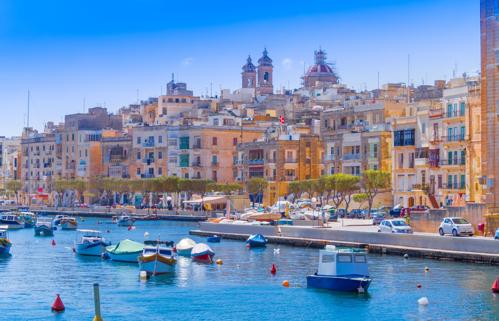
For those staying on land, Malta still offers a striking partial eclipse alongside its usual reliable summer weather, making it a comfortable option for combining the event with a more traditional island holiday.
Those looking for more from this delightful Mediterranean nation at any time of year can take a look at our Valletta, Mdina & the Wonders of Malta tour.
3. Andalucía, Spain
Andalucía, Spain's Moorish southern tip, sits right at the eclipse's entry point into Europe, with totality crossing the coast near Cádiz for around two minutes and 54 seconds, beginning at approximately 10:45am local time. The region's typically clear August skies improve the odds of an unobstructed view, and better yet, its proximity to the UK means there's no need for long-distance travel to experience the full totality of the eclipse.
The best part about watching the eclipse from Southern Spain, though, is the abundance of cultural, culinary and coastal treasures that remain long after the totality has passed. From elegant Seville, the home of the flamenco, to Granada and Cordoba, there are hundreds of wish-list stops that you can add to your eclipse-themed escape. Coastal towns around Cádiz and Málaga are expected to be Andalucía's most popular viewing points, so securing your spot in advance is highly recommended.
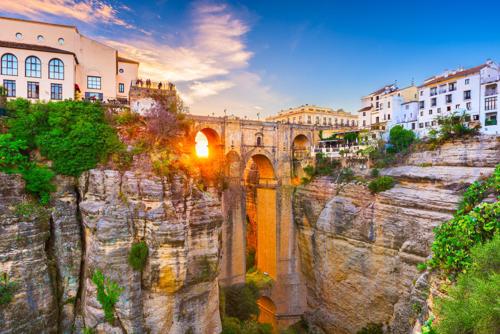
If you’re keen to keep exploring Andalucía, you can enjoy its wide range of wish-list sights on our ever-popular Premier Collection tour, The Majestic Cities of Andalucía.
4. Fes, Morocco
Known for its striking imperial cities and lively Mediterranean towns, Morocco is also one of the first points on the path of totality, with the eclipse crossing the country's northern coast shortly after passing over southern Spain. In the north, seaside cities are backed by vast mountainous landscapes, and it's these backdrops that will be the most impressive in the dimmer light.
For those based further inland, Fes is the ideal alternative for those who don't mind only seeing a partial eclipse, with around 89% of the sun's surface obscured at its peak. Though it falls outside the path of totality, this level of coverage still produces a dramatic dimming of daylight, and Fes's medieval medina, tanneries and historic architecture make it a rewarding base for those prioritising culture alongside the sky event.
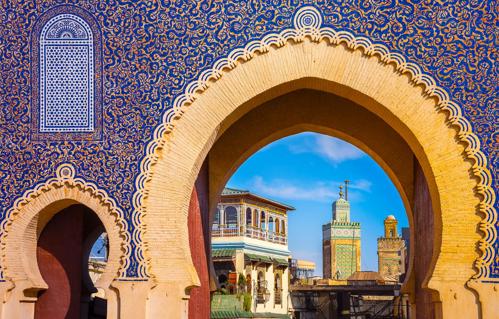
If Morocco's regal wonders are near the top of your travel wish-list, our award-winning tour, Imperial Cities of Morocco & the Sahara Desert, takes in more than just the seaside towns of the north.
5. Luxor, Egypt
Egypt stands to experience the longest totality of the entire eclipse, with up to six minutes and 23 seconds of total darkness expected near Luxor, the longest duration anywhere on the path. Clear desert skies and minimal rainfall in early August mean visitors are likely to be able to watch the eclipse without any cloud cover, and Luxor's spectacular ancient temples are sure to be a sight to behold in the shadow.
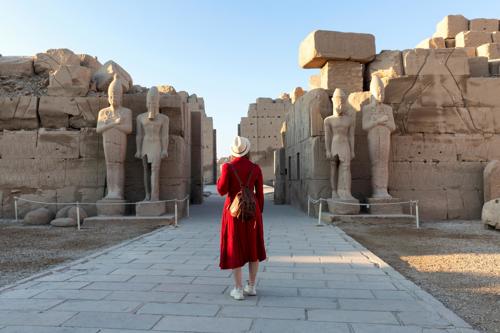
Another spot to make the most of the total eclipse in Egypt is the Red Sea resort town of Hurghada, which sits within the path itself and promises almost five minutes of totality alongside its usual appeal of reliable sunshine. Those who are keen to add some extra excitement to their beach escape won't want to miss out on idyllic Hurghada.
To take in Luxor's temples alongside more of Egypt, our Cairo, Luxor & Nile Cruise tour is worth a look.
Get inspired for the Eclipse of the century'
If you can't wait until next year, there's another total eclipse coming up much sooner, on Wednesday, 12 August this year. Starting over Siberia in Russia, the eclipse's path will sweep across Greenland, on the edge of North America, and vast areas of the North Atlantic, before it's visible from Iceland’s West Coast. While the best seats in the house will be on the water, with charted eclipse sailings proving a popular option, visitors can also enjoy an equally impressive albeit shorter totality from the national capital, Reykjavík.
The main event, however, will come after the eclipse finishes its journey south, and Northern Spain is the ideal place to enjoy full totality. Many of the country's northern regions, from Galicia to Asturias, lie directly beneath the path of the eclipse, meaning they'll experience some of the longest periods of totality on the planet. A Coruña is a great choice for eclipse chasers as its westerly position means the eclipse will be visible earlier in the evening with the sun higher in the sky. The towns of Oviedo, Leon and Burgos are also popular choices, thanks to their drier weather and reliably clear skies.
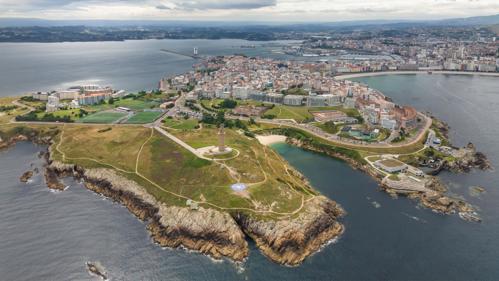
While it's worth noting that the majority of this year's eclipse path will take place over the Atlantic Ocean, meaning only partial visibility will be available in the UK, it's the ideal inspiration for the main event next year. You can also observe 2026's second lunar eclipse two weeks later. For the best views, though, consider a 2027 trip to one of the destinations featured above.
How to watch a solar eclipse safely
It goes without saying that it's important not to look directly at the sun during an eclipse, but there are other measures you can take to ensure a safe and enjoyable viewing experience. If you're planning on looking skyward during the eclipse, it's important to note that it's only safe to do so either at its totality, when the sun is completely covered by the moon, or when using specialised glasses.
Look out for the official ISO 12312–2 standard on the packaging when buying glasses for this purpose and be sure to use a UV-protected film if viewing through binoculars or a camera lens.
Go beyond the eclipse with Newmarket Holidays
Our tours don't run to coincide with the eclipse, but we've got hundreds of itineraries which are perfect for delving deeper into each destination, at any time of year. Give one of our friendly holiday planners a call today or check out our dedicated destinations page for our full range of worldwide escorted tours.


