World Photography Day: The most photographed sights by continent

As the world celebrates the art of photography, why not take a look at the landmarks that have been captured more than any others?
They say a picture paints a thousand words, and as people across the globe celebrate World Photography Day, we’re inclined to agree. Some spots around the world are so impressive that words simply don’t do them justice, and that’s what makes them so popular for photographers. To help you decide which landmarks to add to your photo album next, we’ve compiled a list of the most pictured landmarks that you can see on our escorted tours, spanning all six major continents. With that in mind, here are the sights you won’t want to miss out on and a few top tips for capturing the perfect shot.
The world’s most photographed sights by continent
Europe – The Eiffel Tower
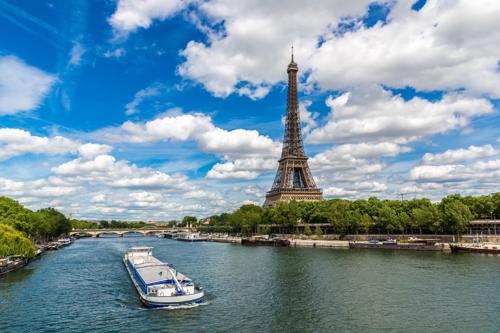
Gustave Eiffel, the engineer behind Paris’ iconic crown jewel, once lamented that he “ought to be jealous of the tower” as it became more famous than the man himself, and photography has only served to exacerbate that fact. Having been the subject of hundreds of millions of holiday snaps every year since its creation in 1889, this Belle Epoque wonder tops the list as Europe’s most photographed landmark and for good reason. Few sights on the continent are as widely recognisable as the Eiffel Tower, and under its nightly illuminations, it cements the French capital’s reputation as the ‘City of Lights’ in a truly spectacular way.
While the tower itself can be seen from anywhere in the city – on clear days, it’s even visible from up to 50 miles away – the best views are the ones you can enjoy away from the crowds. For many, the ideal photo opportunity can be found along the banks of the Seine, and if you want to enjoy the views without the hassle, be sure to book a river cruise for the best seats in the house.
Our recommended tour – River Seine Discovery
Africa – The Pyramids of Giza
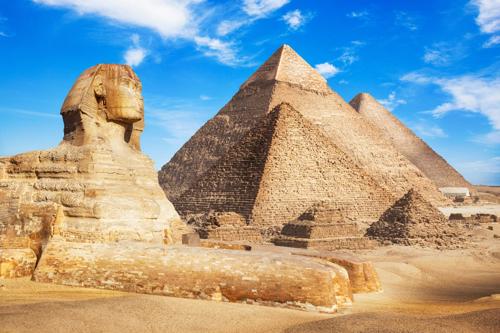
More than 4,500 years after construction, the Great Pyramid of Giza remains the only one of the ancient world's seven wonders still standing. Built as a tomb for Egypt’s ancient pharaohs, this towering landmark held the record for the tallest structure on Earth for roughly 3,800 years, and its surrounding pyramids are just as impressive. As photography has become more readily available to travellers, it’s only served to capture the imaginations of even more travellers around the world. A true architectural marvel, few images capture the scale of human ambition quite like the pyramids rising from the desert sands on the edge of Cairo.
While most visitors head straight for the pyramids themselves, the real photo opportunity lies a short distance away at the Giza Plateau's panoramic viewpoint, where all three pyramids and the Sphinx line up in a single frame. Arrive close to sunrise or sunset, when the desert is bathed in North Africa’s golden early-morning sunlight, and you'll avoid both the midday heat and the busiest crowds.
Our recommended tour – Cairo, Luxor & Nile Cruise
Asia – Angkor Wat
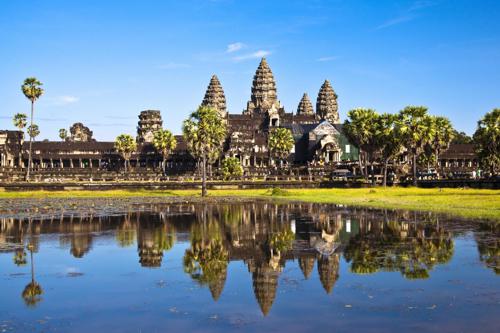
As the largest religious monument in the world, Angkor Wat has drawn photographers to Cambodia for generations, with its five central towers providing a magnificent backdrop to every visit. The temple was commissioned in the early 12th century by King Suryavarman II of the Khmer, as a monument to the god Vishnu, though it later evolved into a Buddhist sanctuary. For many photographers, there aren’t many sunrise views in Southeast Asia that stand out quite like Angkor Wat in the dimmer morning light.
The most popular spots to shoot can be found around the reflecting pools, where the temple's towers appear twice, once in stone and once in still water. Ensuring you arrive before dawn is highly recommended, since this spot fills quickly with fellow early risers hoping for the same view. Once the sun is up, the nearby temples of Ta Prohm and the Bayon, with its carved stone face, offer a memorable change of pace rife with plenty more photo opportunities.
Our recommended tour – Follow the Mekong – Thailand, Cambodia & Vietnam
Oceania – Sydney Harbour
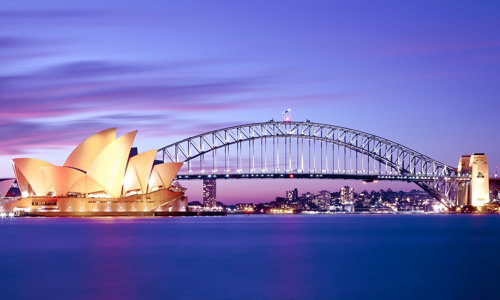
Few skylines are as recognisable as Sydney’s, and its harbour, framed by its famous Opera House and Harbour Bridge, is one of the most celebrated spots for photography in Oceania. Nicknamed 'The Coat Hanger' since its completion in 1932, the bridge has graced many an Australian postcard alongside the fan-shaped roofs of the Opera House, and it’s not hard to see why.
For a panoramic shot that places both landmarks side by side across the water, head to Mrs Macquarie's Chair in the Royal Botanic Garden. Surrounded by lush greenery, it’s a natural vantage point favoured by photographers since Victorian times. Circular Quay offers a closer perspective of the Opera House's curved roofs, while a ferry across the harbour provides a shifting viewpoint that's hard to replicate on foot. Time your visit for early evening, when the sails catch the last of the light, for the most cinematic views.
Our recommended tour – Australia Uncovered
North America – Niagara Falls
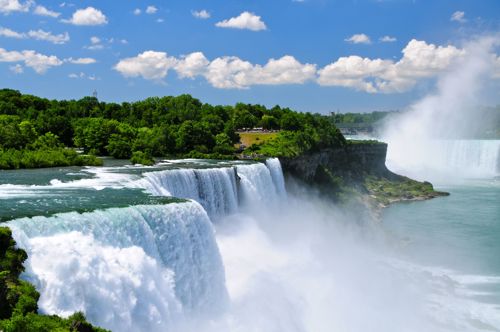
Niagara Falls is a unique choice in the sense that it was formed entirely by nature, having been carved by glacial flows more than 12,000 years ago. Made up of three separate falls – Horseshoe, American, and Bridal Veil – it moves more water than any other waterfall in North America, and that sheer volume has made it a fixture of travel photography since the earliest days of the camera. Few natural landmarks manage to look as dramatic in a snapshot as they do in person, but Niagara more than lives up to its reputation.
The best photographs are almost always taken from the Canadian side, where the curve of Horseshoe Falls faces directly towards you rather than away. For a different perspective entirely, feel the spray on your camera lens with a falls-side cruise or take to the skies above on a helicopter flight. After dark, Niagara Falls becomes the backdrop for a colourful LED light show, showcasing the water in a whole new light.
Our recommended tour – Canada – Niagara Falls to the Rockies
South America – Machu Picchu
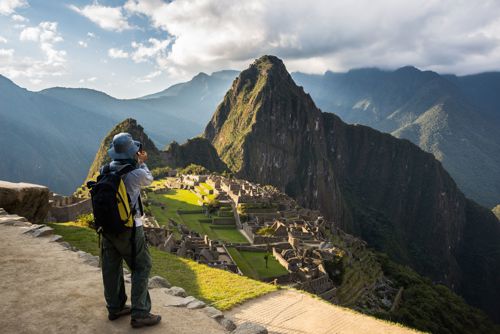
Tucked away amongst Peru’s cloud-laden Andean peaks, more than 7,900 feet above sea level, Machu Picchu spent centuries forgotten by the outside world before it was rediscovered in 1911. This alpine wonder was built by Emperor Pachacuti in the 15th century and is believed to have been the crown jewel of Incan civilisation. Its grandeur left such an impression on the American explorer, Hiram Bingham, that he claimed, “no place in the world which can compare with it.” If the photographs are anything to go by, it’s hard to disagree.
Machu Picchu has since become one of South America's most photographed sites, with photographers often heading for the Guardian's House terrace for the best and most complete views of the citadel. Those willing to climb further can continue to the Sun Gate, the original Inca entrance point, for a wider view back across the ruins. Whichever route you take, arriving early remains the single best piece of advice for photographing Machu Picchu at its most atmospheric.
Our recommended tour – Peru – Land of the Incas
Picture your dream trip with Newmarket Holidays
Are any of these magnificent sights still on your travel wish-list? With our iconic landmarks collection, you can find a broad range of tours, spanning six continents, that’ll allow you to see them at their best in total comfort. Give one of our friendly holiday planners a call today for more information or visit our website. If your heart lies elsewhere, we’ve got hundreds of escorted itineraries across the world, and you can browse them all on our dedicated destinations page.