
Morocco Travel Guide
Explore ancient medinas, Saharan landscapes and vivid culture in one of North Africa's most captivating destinations
Morocco: our destination guide
Few destinations reward the curious traveller quite like Morocco. Just a short flight from the UK, this North African country blends Berber, Arab and Andalusian influences into a culture that feels both ancient and alive. From the winding souks of Marrakesh to the golden silence of the Sahara Desert, and from the imperial grandeur of Fes to the windswept Atlantic charm of Essaouira, this is a destination of remarkable contrasts, all within manageable distances. For travellers who value comfort and the reassurance of expert local guidance, places to visit in Morocco come alive on an escorted tour, where the logistics are taken care of and every highlight is within reach.
Morocco’s landscapes shift as dramatically as its cultures. The High Atlas Mountains carve across the country’s spine; kasbahs dot the desert roadsides; and centuries-old medinas conceal riads, tanneries, and markets that have barely changed in hundreds of years. Whether you’re drawn by the call to adventure, the depth of history, or the warmth of Moroccan hospitality, the country consistently exceeds expectations.
Quick highlights: must-see places in Morocco
- Marrakesh - A vibrant imperial city of souks, palaces, and traditional riads
- Fes - A historic medina, one of the world’s oldest university cities, and a cultural heart
- Sahara Desert - Golden dunes, Berber camps, and unforgettable desert experiences
- Atlas Mountains - Scenic peaks, Berber villages, and dramatic mountain landscapes
- Essaouira - Atlantic coastal charm, seafood, and a relaxed, creative atmosphere
- Casablanca - The Hassan II Mosque, modern boulevards, and Morocco’s commercial centre<
Discover the best of Morocco, made effortless with Newmarket Holidays escorted tours to Morocco.
Places to visit in Morocco
Morocco’s key destinations are spread across a compact and well-connected country, making it ideal for touring. Whether you’re visiting imperial cities, trekking mountain passes, or unwinding on the Atlantic coast, each region offers a distinct character and pace.

Marrakesh
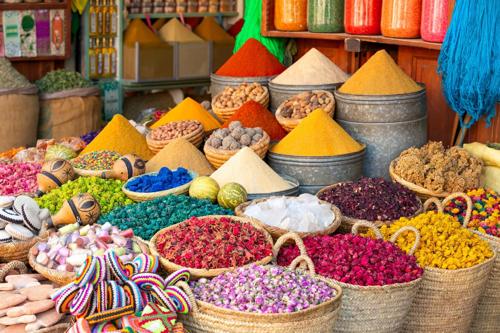
Morocco’s most iconic city needs little introduction. The Jemaa el-Fnaa square is a sensory spectacle at any hour, with storytellers, acrobats, musicians, and food stalls fill the air with sights and sounds. Behind the square, the medina unfolds into a maze of souks selling textiles, spices, metalwork, and traditional crafts. Beyond the markets, Marrakesh offers the Bahia Palace, the Koutoubia Mosque, and the botanical sanctuary of Jardin Majorelle. As a gateway to the Atlas Mountains and the Sahara, it’s also the natural starting point for wider exploration. Explore escorted tours to Marrakesh.
Best for: Culture enthusiasts, first-time visitors, Sahara access, shopping

Fes
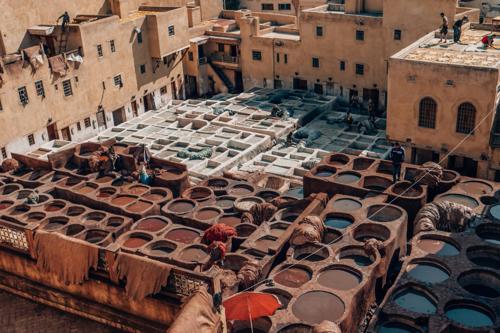
Home to one of the world’s oldest universities and a UNESCO-listed medina, Fes is Morocco’s cultural and intellectual heart. Its car-free historic district - the largest in the world - is a warren of medieval streets, traditional riads, and centuries-old tanneries where leather is still dyed using methods dating back over 1,000 years. A guided tour is essential here; the medina rewards those who venture beyond the main thoroughfares. Discover tours visiting Fes.
Best for: History lovers, cultural immersion, authentic experiences, photography

Atlas Mountains
A dramatic mountain range stretching across Morocco, the High Atlas offers scenic drives, Berber village visits, and trekking opportunities. The high mountain pass of Tizi n’Tichka is one of the most impressive routes in North Africa, and the kasbah of Ait Ben Haddou, a UNESCO World Heritage Site - sits dramatically against the desert landscape beyond. Perfect for those who want to experience traditional mountain life at a comfortable pace.
Best for: Scenery lovers, nature enthusiasts, Berber cultural experiences, photography

Sahara Desert
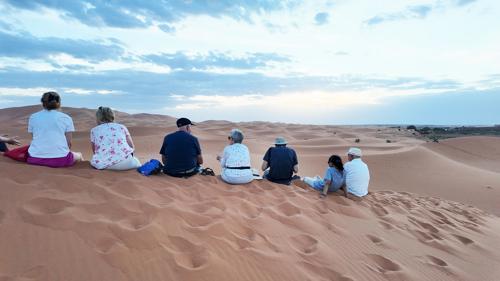
The Merzouga dunes and the Erg Chebbi region offer Morocco’s most dramatic desert landscapes - great sweeps of golden sand that glow amber and rose at sunset. Camel treks, 4WD drives, and overnight stays in Berber camps under a canopy of stars make the Sahara one of the most memorable things to do in Morocco. Explore tours including the Sahara Desert.
Best for: Adventure seekers, desert experiences, sunset photography, wish-list moments

Essaouira
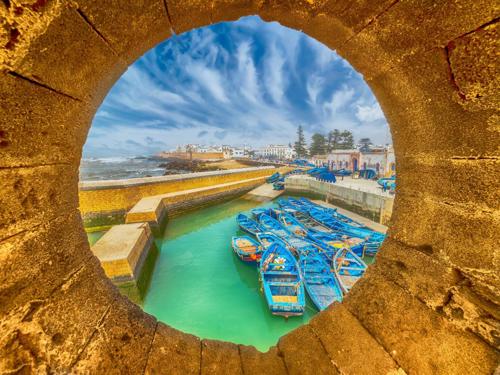
This charming Atlantic coastal town offers a gentler pace after the bustle of Marrakesh and Fes. Its UNESCO-listed medina is a delight of white-washed buildings and blue accents, flanked by imposing sea-facing ramparts. Fresh seafood, art galleries, and the nearby argan-oil cooperatives give Essaouira a distinctive, creative character. Explore tours including Essaouira.
Best for: Beach lovers, foodies, artistic culture, relaxation, seafood dining
Our holiday to Morocco


- Visit the Hassan II Mosque in Casablanca, home to the tallest minaret in the world
- Embark on a guided tour of Rabat’s old medina, Morocco’s capital, and first imperial city on the coastline
- Call at Volubilis, a partly excavated Berber-Roman city and former Roman capital
-
Flights included
10 days
from £1,780 ppwas £2,095 pp -
Dates Available
January 2027 - December 2028
-
Duration
10 days
-
Depart From
8 airports
-
Excursions & Visits
8 included
-
Meals
15 included
Top things to do in Morocco
Morocco is rich with experiences, from iconic landmarks to quieter cultural encounters. Many of the activities below are included within Newmarket Holidays tours, while others can be enjoyed during time at leisure. Always check your individual tour itinerary, as free time and optional activities vary.
1. Explore Marrakesh's Jemaa el-Fnaa Square
Morocco’s most iconic square is a sensory spectacle of snake charmers, storytellers, musicians, and food vendors. Surrounding it is the medina’s intricate maze of souks selling textiles, spices, metalwork, and crafts. A guided visit reveals layers of cultural authenticity that independent exploration often misses.
Time needed: 3-4 hours (visits in the morning and evening are both rewarding)
Estimated cost: Free to explore; optional meals and shopping from £5-£20
Accessibility: Crowded and uneven surfaces; narrow alleyways with steps. Morning visits are less busy. Discuss mobility requirements with your guide in advance.
Included on: Imperial Cities of Morocco & the Sahara Desert
2. Sahara Desert Camel Trek & Berber Camp
Watch the sunset transform the dunes through shades of amber and rose, enjoy traditional meals, and stay under starlit skies, a genuinely breathtaking way to experience the desert.
Time needed: Up to two to three days with overnight camping
Estimated cost: Typically included on escorted tours; costs vary by tour standard
Accessibility: Camel riding involves mounting and dismounting; discuss fitness levels with your tour operator. Berber camps offer comfortable traditional accommodation with modern facilities.
Included on: Imperial Cities of Morocco & the Sahara Desert
 |
 |
3. Visit the Hassan II Mosque in Casablanca
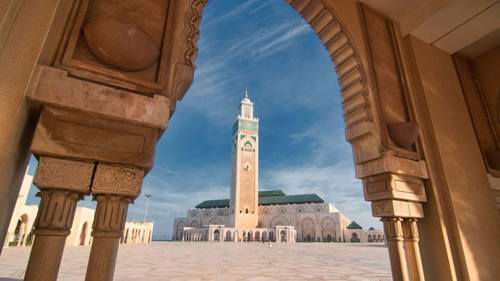
One of the world’s largest mosques, the Hassan II Mosque combines impressive Islamic architecture with views over the Atlantic Ocean. Its minaret, at 210 metres, is the tallest in the world. Non-Muslim visitors can tour the interior, exterior and surrounding grounds during designated times.
Time needed: One to two hours
Estimated cost: Typically included on escorted tours
Accessibility: Exterior grounds are mostly accessible; some uneven surfaces. Interior visits involve steps - discuss requirements in advance.
Included on: Imperial Cities of Morocco & the Sahara Desert
4. Wander the Medina of Fes
Fes’s medina is one of the world’s largest car-free urban areas. A guided tour reveals the Medersa al-Attarine, with its colourful tilework and carved cedar wood; the Nejjarine Museum of Wooden Arts; and the Chouara Tannery, where leather has been dyed using traditional methods for over 1,000 years.
Time needed: Four to six hours (can be split across visits)
Estimated cost: Typically included on escorted tours; tannery visits from approximately £5-£10 independently
Accessibility: Extremely narrow alleys with frequent steps and uneven medieval paving. A guide is essential. Not suitable for those with severe mobility restrictions.
Included on: Imperial Cities of Morocco & the Sahara Desert
 |
 |
5. Trek in the Atlas Mountains
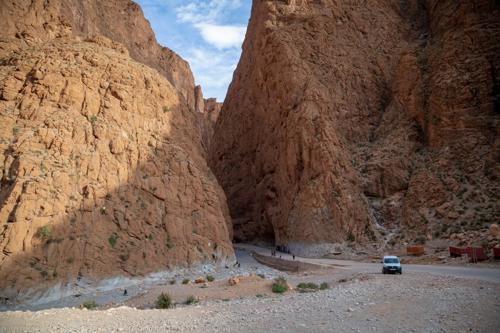
The Atlas Mountains offer spectacular scenery and authentic encounters with Berber communities. Guided treks or scenic drives reveal traditional mountain villages, terraced fields, and panoramic viewpoints. The walk through Todra Gorge, towering limestone canyons carved by the Todra River, is a particular highlight.
Time needed: Half to full day depending on route
Estimated cost: Typically included on escorted tours; independent treks from approximately £30-£60
Accessibility: Trekking involves uneven terrain and higher altitude (2,000-3,000 metres). Discuss fitness levels before trekking. Scenic drives are suitable for all mobility levels.
Included on: Imperial Cities of Morocco & the Sahara Desert
6. Essaouira's Beach & Harbour
This captivating Atlantic coastal town offers fresh seafood restaurants overlooking the harbour, windswept beaches, and a bohemian atmosphere. It’s an ideal counterpoint to the intensity of Marrakesh and Fes, and the argan-oil cooperatives in the surrounding region are fascinating to visit.
Time needed: Up to a full day
Estimated cost: Meals from £8-£20; beach activities free
Accessibility: The medina has some uneven surfaces; the seafront promenade and beaches are more accessible.
Optional leisure-time activity: This experience is enjoyed during free time on certain tours. Check your individual itinerary for details.
 |
 |
Food & drink in Morocco
Moroccan cuisine is one of the great pleasures of travelling in the country. Shaped by Berber, Arabic, Andalusian, and Mediterranean traditions, it’s a cuisine of aromatic spices, slow-cooked depth, and generous hospitality. Dining here is a social experience - unhurried and convivial, with mint tea as the universal gesture of welcome.
Signature dishes and drinks
- Tagine - Morocco’s signature slow-cooked stew, with meat, vegetables, and dried fruit, cooked in a conical clay pot
- Couscous - steamed semolina with vegetables and meat, traditionally served on Fridays
- Pastilla - crispy pastry with a spiced meat filling, sweet and savoury in equal measure
- Harira - a nourishing traditional soup, especially popular during Ramadan
- Fresh grilled fish and seafood - particularly superb in Essaouira and coastal towns
- Moroccan salads - tomato, cucumber, carrot, and beetroot, typically served as starters
- Khobz - traditional Moroccan bread, a staple at every meal
- Moroccan mint tea - hot, sweet, and ubiquitous; accepting a glass is a warm social custom
- Moroccan coffee - strong and aromatic, often served with milk
Dietary requirements can often be accommodated with advance notice; it’s worth checking options at the time of booking. Moroccan cuisine offers plentiful vegetarian choices.
Vegetarian & plant-based dining
Morocco has a strong vegetarian tradition rooted in its culinary history, and plant-based eating is well catered for across the country. Many dishes are naturally vegetarian or can be easily adapted. Vegetable tagines, couscous, salads, and bread are staples in every region, and most restaurants readily offer vegetarian mains and mezze platters. Markets are excellent for fresh produce, nuts, and dried fruits, and street food vendors commonly sell vegetable-filled pastries and bread. If you’re unsure about ingredients - for example, whether a broth is meat or vegetable-based - it’s always worth asking.
Safe street food & drinking water tips
- Bottled water is recommended for visitors, even in areas where tap water is treated; your tour operator will advise
- Street food is most enjoyable at busy stalls with visible preparation and high turnover
- Fresh juice stalls and mint tea are widely available and typically safe throughout Morocco
- Hygiene standards in restaurants catering for tourists are generally good; escorted tours manage all meal logistics
Local dining etiquette
- Dining is leisurely and social - meals are a time for connection, not rushing
- Eating with the right hand is customary when sharing communal dishes
- Accept mint tea or coffee as a gesture of hospitality - it’s polite to at least taste it
- Sharing food from communal plates is normal and encouraged in traditional settings
- During Ramadan, eating, drinking, or smoking in public during daylight hours is disrespectful; plan accordingly
Getting around Morocco
Morocco is well-connected and straightforward to navigate on an escorted tour, with no self-driving required. Here’s what first-time visitors need to know.
- Main airports: Marrakesh Menara, Casablanca Mohammed V, and Fes-Saiss are the principal international gateways
- Coach touring: comfortable, air-conditioned coach travel handles all transfers between destinations on escorted tours - the scenery is half the experience
- Domestic flights: efficient connections link major cities; Marrakesh to Fes, for example, takes around one hour by air versus eight to 10 hours by road
- Mountain roads: scenic but winding through the Atlas passes - journeys are slower than they appear on a map, and all the better for it
- Desert roads: well-maintained on principal tourist routes, with 4WD vehicles used for the dunes themselves
Escorted tours handle all logistics, from transfers and luggage to local guides and meals, so you can focus entirely on the experience.
The best time to visit Morocco
Morocco can be visited year-round, and the best time to visit depends on your interests and which regions you plan to explore. The country’s climate varies significantly by altitude and geography - the coast and high mountains are considerably cooler than the desert lowlands - so the ideal timing differs by destination. Spring and autumn are widely considered the most comfortable seasons for touring across all regions.
Autumn (September-November)
Temperatures ease after the summer heat, and September through October remain warm (22-30°C) with excellent conditions for all regions. The crowds thin from the summer peak, and late-season tours often offer good value. November brings comfortably cool temperatures, ideal for active touring in the cities and mountains.
Winter (December-February)
Mild to cool across the lowlands (10-20°C), winter is an excellent season for desert and city touring. Attractions are quieter and prices are often better value. Mountain regions can experience snow, which can affect accessibility on higher roads - worth checking before travel. Occasional rainfall in coastal areas is possible.
Spring (March-May)
This is the most popular season for good reason. Temperatures are ideal across all regions, wildflower blooms appear in March and April, and the longer daylight hours in May are perfect for sightseeing and trekking. It’s the peak season, so popular sites will be busier and prices higher - but the conditions are hard to beat.
Summer (June-August)
Temperatures in the desert and lowlands reach 35-40°C, which can make intensive sightseeing challenging. However, the Atlas Mountains and Atlantic coast remain pleasant, and this is the quietest period with the best value for budget-conscious travellers. Mountain trekking and higher-altitude areas are particularly appealing in summer.
Morocco’s weather by month
| Month | Temp | Notes |
|---|---|---|
| January | 8–20°C | Cool; excellent for desert and city touring. |
| February | 8–20°C | Similar to January; often good value for guided tours. |
| March | 12–22°C | Warming up; wildflower blooms; excellent for all activities. |
| April | 15–26°C | Peak spring conditions; ideal for trekking. |
| May | 18–30°C | Perfect for all regions; longer daylight hours. |
| June | 22–35°C | Mountain regions preferable; desert begins to heat. |
| July | 25–40°C | Hot; mountain trekking preferred; coastal areas pleasant. |
| August | 25–40°C | Very hot; quietest period; best for budget travellers; mountain and coastal focus. |
| September | 22–36°C | Heat easing; excellent balance of weather and fewer crowds. |
| October | 18–30°C | Ideal conditions returning; superb for all activities. |
| November | 14–25°C | Comfortable for touring; fewer crowds; shoulder season value. |
| December | 10–20°C | Quieter and good value; ideal for city and desert breaks. |
Note: the best season to visit Morocco for most activities is spring (March-May); autumn (September-October) is a close second with fewer crowds. Summer heat in the Sahara is intense - early starts and midday rest are essential. Ramadan affects restaurant hours and local customs - your tour manager will advise.
Accessibility & comfort in Morocco
Morocco’s historic medinas are among its greatest attractions, but they also present some of the most challenging terrain for those with mobility considerations. Narrow alleys, uneven medieval paving, and frequent steps are a feature of Fes, Marrakesh, and other historic centres. Fes in particular requires careful footing throughout.
- Desert and mountain terrain involves sand dunes and uneven ground; these sections are manageable at a pace that suits the group
- Modern hotels and riads in tourist areas generally have good accessibility; traditional riads may have internal steps - worth checking at booking
- Air-conditioned coach travel significantly reduces walking requirements between destinations
- Guided tours manage the pace throughout, with regular rest breaks and group flexibility
- Comfortable, sturdy footwear is essential; a hat, sunscreen, and sunglasses are recommended year-round
- Light, modest clothing is respectful in conservative areas - shoulders and knees covered is the practical standard
- Discussing mobility and health needs at the booking stage ensures the right arrangements are made in advance
- Hydration is important, particularly in summer - gradual acclimatisation to the heat and regular water breaks are strongly recommended
Essential information for Morocco
Morocco’s currency
The official currency is the Moroccan Dirham (MAD), a closed currency that can only be obtained within Morocco. British pounds can be exchanged at airports, banks, and hotels. Credit and debit cards are widely accepted in urban areas, hotels, and tourist restaurants, but cash is useful for medinas, tips, and smaller purchases. Your tour operator will advise on currency exchange and ATM access.
Tipping in Morocco
Tipping is customary and appreciated. Around 10% in restaurants (if service is not included) is the standard; rounding up works well in casual cafés and for street vendors. Hotel staff, guides, and drivers appreciate modest tips of £1-£3 per service.
Plugs in Morocco
Morocco uses plug types C and E (round pins). UK travellers will need an adaptor. Many hotels have adaptors available, but it’s worth bringing your own to be sure.
Language in Morocco
Arabic and Berber are the primary languages; French is widely spoken in business and government. English is increasingly common in tourist areas, hotels, and restaurants. Your escorted tour guide will facilitate all communications throughout the trip.
Morocco local customs
- Ramadan: eating, drinking, or smoking in public during daylight hours is disrespectful during this holy month
- Dress modestly in conservative areas: covering shoulders and knees is the respectful standard
- Photography: always ask permission before photographing people, particularly in medinas
- Haggling: expected in souks and part of the social experience - approach it with good humour
- Greetings and eating: using the right hand is customary when greeting and sharing food
FAQs
Discover our blog

The best spots to experience the 'Eclipse of the century' in 2027
It's set to be another summer of memorable travel next year, and a total solar eclipse only adds to the excitement.

Staff Stories: Memories made in Morocco with Joe
We go behind the scenes on one of our most popular tours, Imperial Cities of Morocco & the Sahara Desert, with Joe, our content marketing executive.

True love’s trips: Five of the best destinations for a romantic getaway
Share moments of magic with that special someone, or treat yourself to a little solo TLC, this Valentine’s Day with an intimate escape to one of these romance hotspots.