
Croatia Travel Guide
History, coastline and natural scenery across one of Europe's most captivating destinations
Croatia: our destination guide
Croatia has quickly become one of Europe’s most rewarding destinations, combining historic cities, Adriatic coastline, and striking natural scenery within a relatively compact area.
From medieval walls overlooking the sea to waterfall-filled national parks, it offers variety without the need for long journeys between highlights. Travellers are drawn by its cultural heritage, relaxed pace, and well-preserved towns, many of which are UNESCO-listed.
Quick highlights: must-see places in Croatia
- Dubrovnik Old Town – A beautifully preserved medieval city set above the Adriatic
- Split & Diocletian’s Palace – Roman history woven into a lively coastal city
- Plitvice Lakes National Park – Waterfalls and lakes linked by wooden walkways
- Hvar Island – Elegant harbour and relaxed island atmosphere
- Trogir Old Town – Compact historic island town
- Zagreb Historic Centre – Cultural capital with café-lined squares
Discover Croatia’s highlights with confidence on a fully escorted Newmarket Holidays tour.
Places to visit in Croatia
Croatia’s key destinations are concentrated along the Adriatic coast and inland national parks, making it ideal for structured touring.

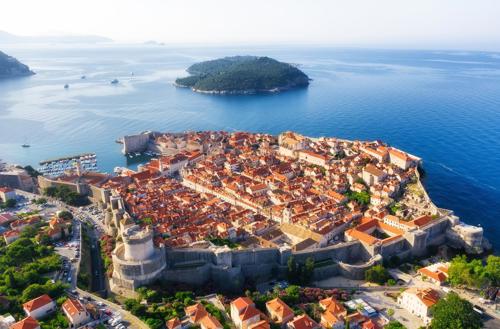
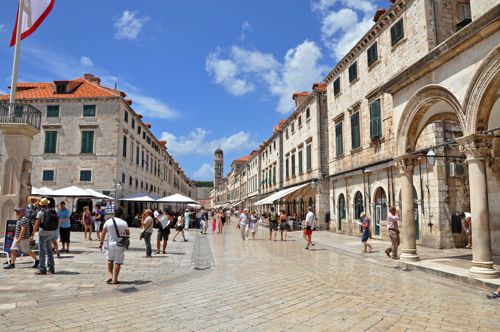
A fortified medieval city, Dubrovnik is one of the most famous places in Croatia. Its stone walls, historic streets, and sea views make it particularly well suited to guided exploration.
Best time to visit: May–June, September
Included on:

Split (Central Dalmatia)
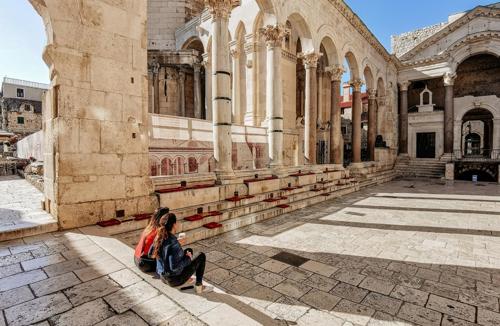
Split blends Roman heritage with modern coastal life. Diocletian’s Palace forms the heart of the city, surrounded by cafés and waterfront promenades.
Best time to visit: May–June, September
Included on:

Plitvice Lakes National Park
One of the most beautiful places in Croatia, Plitvice is known for its turquoise lakes and cascading waterfalls.
Best time to visit: May–June, September–October
Included on:

Hvar Island
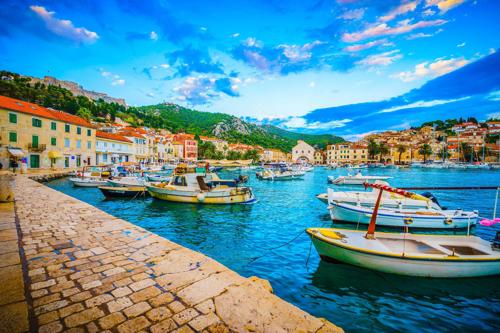
A scenic island with a historic harbour and relaxed Mediterranean atmosphere, often visited as a day trip from Split.
Best time to visit: June–September

Trogir Old Town
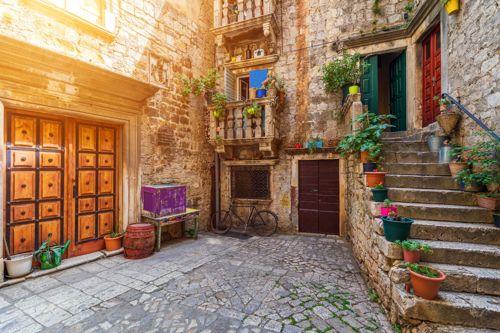
A UNESCO-listed island town with Romanesque and Renaissance architecture, ideal for gentle walking.
Best time to visit: April–June, September

Zagreb Historic Centre
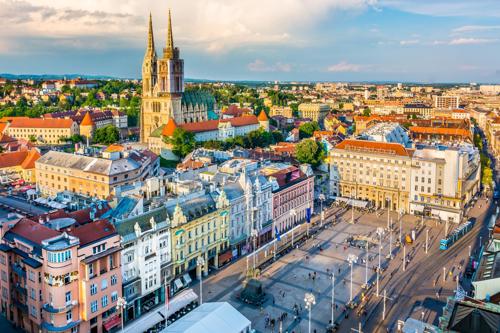
Croatia’s capital offers Austro-Hungarian architecture, museums, and café culture.
Best time to visit: April–June, September–October
Top things to do in Croatia
These are some of the most popular things to do in Croatia, combining iconic landmarks with relaxed experiences. Many are included within Newmarket Holidays tours, while others can be enjoyed during time at leisure. Always check individual itineraries.
1. Walk the walls of Dubrovnik Old Town
- Overview: Walk along medieval walls with views over the Adriatic and terracotta rooftops.
- Time Needed: 2–3 hours
- Estimated Cost: From €40
- Accessibility: Uneven steps; partial access only
2. Explore Diocletian’s Palace, Split
- Overview: A Roman palace forming the centre of Split’s Old Town.
- Time Needed: 2 hours
- Estimated Cost: Free (entry fees for specific sites)
- Accessibility: Mostly flat, cobbled streets
 |
 |
3. Visit Plitvice Lakes National Park
- Overview: Wooden walkways connect lakes and waterfalls in a forested setting..
- Time Needed: Half to full day
- Estimated Cost: See official website
- Accessibility: Limited due to uneven terrain
4. Visit the island of Hvar
- Overview: A scenic Adriatic island known for harbour views and historic squares.
- Time Needed: Full day
- Estimated Cost: €20–40 return ferry
- Accessibility: Boat access varies
 |
 |
5. Discover Trogir Old Town
- Overview: Compact historic town ideal for a short visit.
- Time Needed: 1–2 hours
- Estimated Cost: Free
- Accessibility: Flat but cobbled
6. Take a coastal drive along the Dalmatian Coast
- Overview: Scenic routes linking historic towns and coastal views.
- Time Needed: Half to full day
- Estimated Cost: Included on tours
- Accessibility: Comfortable via coach travel
 |
 |
7. Visit Dubrovnik’s historic centre
- Overview: Explore streets, squares, and landmarks within the city walls.
- Time Needed: Half day
- Estimated Cost: Free to explore
- Accessibility: Cobblestones and steps
8. Explore Zagreb’s Upper Town
- Overview: Historic streets, churches, and viewpoints in the capital.
- Time Needed: Half day
- Estimated Cost: Free
- Accessibility: Some steep streets
 |
 |
Our top Croatia tours


- Board the sophisticated MS Adriatica for seven nights of island hopping around Croatian isles
- Spend time in the ‘Pearl of the Adriatic’, Dubrovnik, strolling its pedestrianised streets and ancient walls
- Visit Korčula, the birthplace of the famous explorer Marco Polo and sample the local wine during a tasting
-
Flights included
8 days
from £2,120 ppwas £2,495 pp -
Dates Available
May 2027 - October 2027
-
Duration
8 days
-
Depart From
8 airports
-
Excursions & Visits
8 included
-
Meals
15 included


- Explore Dubrovnik, the Pearl of the Adriatic
- Visit Split, the centre of which is a UNESCO World Heritage Site
- View the iconic Bridge of Mostar, Bosnia
-
Flights included
8 days
from £1,321 ppwas £1,555 pp -
Dates Available
April 2027 - October 2027
-
Duration
8 days
-
Depart From
11 airports
-
Excursions & Visits
6 included
-
Meals
14 included


- Unwind with a stay in a four-star beach resort located on Bosnia and Herzegovina’s idyllic coastline
- Explore UNESCO-listed Dubrovnik and its famed old town, ringed by ancient walls
- Visit Blagaj Tekke and sample rahat lokum, a local delicacy similar to Turkish Delight and traditional Bosnian tea/coffee
-
Flights included
8 days
from £1,347 ppwas £1,585 pp -
Dates Available
April 2027 - October 2028
-
Duration
8 days
-
Depart From
11 airports
-
Excursions & Visits
5 included
-
Meals
14 included
Food & drink in Croatia
Croatian cuisine reflects both Mediterranean and Central European influences.
- Dalmatian Coast: Fresh seafood, olive oil, grilled fish
- Inland regions: Hearty dishes, meats, and stews
Signature dishes include:
- Peka – Slow-cooked meat or seafood
- Black risotto – Seafood-based rice dish
- Ćevapi – Grilled minced meat
- Fresh Adriatic fish
Dining is typically relaxed, with a strong café culture in cities like Zagreb and Split. Dietary requirements can often be accommodated with advance notice on your booking.
Getting around Croatia
- Airports: Dubrovnik, Split and Zagreb are the main international entry points, providing convenient access to both coastal and inland regions.
- Road travel: Roads are well maintained and suitable for longer journeys, making coach travel a comfortable and practical way to explore the country.
- Ferries: Ferries are an essential part of travelling in Croatia, connecting the mainland with islands such as Hvar and Brač.
- Car hire: Car hire is possible and offers flexibility, though it is not always necessary for a well-planned itinerary.
Escorted tours simplify travel by managing routes, transfers and luggage, allowing you to focus on the experience.
The best time to visit Croatia
Croatia enjoys a varied climate, with warm Mediterranean conditions along the coast and a more continental climate inland. This means that the best time to visit Croatia depends on where you plan to go and what you’d like to experience, whether that’s coastal sightseeing, island visits, or exploring historic cities.
Spring (March–May)
Spring brings mild temperatures (around 10–20°C), blooming landscapes, and fewer crowds. It’s an ideal time for exploring historic towns, national parks, and coastal cities at a comfortable pace.
Summer (June–August)
Summer is the warmest and busiest season, with temperatures often reaching 25–30°C or higher along the coast. This is the best time for island visits and enjoying the Adriatic, though popular destinations can be busy.
Autumn (September–November)
Autumn offers warm early-season temperatures (around 20–25°C in September, cooling later) and fewer visitors. It’s well suited to relaxed touring, with pleasant conditions for both coastal and inland travel.
Winter (December–February)
Winter is cooler (around 5–10°C inland, slightly milder on the coast) and much quieter. While coastal resorts slow down, cities like Zagreb remain lively, particularly during the festive season.
Month-by-month weather guide
- January–February: Cool, quieter; best for cities
- March–April: Mild spring weather, fewer crowds
- May–June: Warm, ideal sightseeing conditions
- July–August: Hottest months, busiest on the coast
- September: Warm seas, fewer visitors
- October: Mild, good for touring
- November–December: Cooler, festive city breaks
Regional tips
- Coast: May–June & September
- Inland/Zagreb: April–June & September–October
For many travellers, late spring and early autumn provide the most comfortable conditions, answering the common question of when is the best time to visit Croatia.
Accessibility & comfort in Croatia
Historic centres in Croatia often feature cobbled streets and steps, which can make walking uneven in places. Coaches used on escorted tours provide a comfortable way to travel between destinations. Many hotels offer lifts and accessible rooms, though availability can vary. It’s recommended that any mobility requirements are discussed at the time of booking.
Essential information for Croatia
The ETIAS (European Travel Information and Authorisation System)
As of late 2026, UK citizens (and other visa-exempt travellers) will require this pre-travel authorisation to enter Croatia.
Croatia’s currency
Euro (€). Approximate rate: £1 ≈ €1.15–€1.20.
Tipping in Croatia
Optional; rounding up or 5–10% for good service
Plugs in Croatia
Type C and F - UK travellers will require an adapter.
Useful Croatian phrases
Hello/Hi – Bok
Good day – Dobar dan
Thank you – Hvala
Please – Molim
Yes – Da
No – Ne
Do you speak English? – Govorite li engleski?
FAQs
Discover our blog

Five Croatian hotspots that deserve a place on your travel wish-list
We’re looking forward to another year of wish-list travel, and these five Croatian destinations rank among the most popular options.

The best places to go on holiday in October
From autumn festivals to warm-weather relaxation, October is a surprisingly great time to travel. Discover the best holiday destinations this October.

The best European hotspots to explore in 2026
While Europe is home to spectacular sights, some spots stand out from the rest. From the dramatic Norwegian fjords to the beautiful Douro Valley, we’ve rounded up the top European travel destinations for 2026.