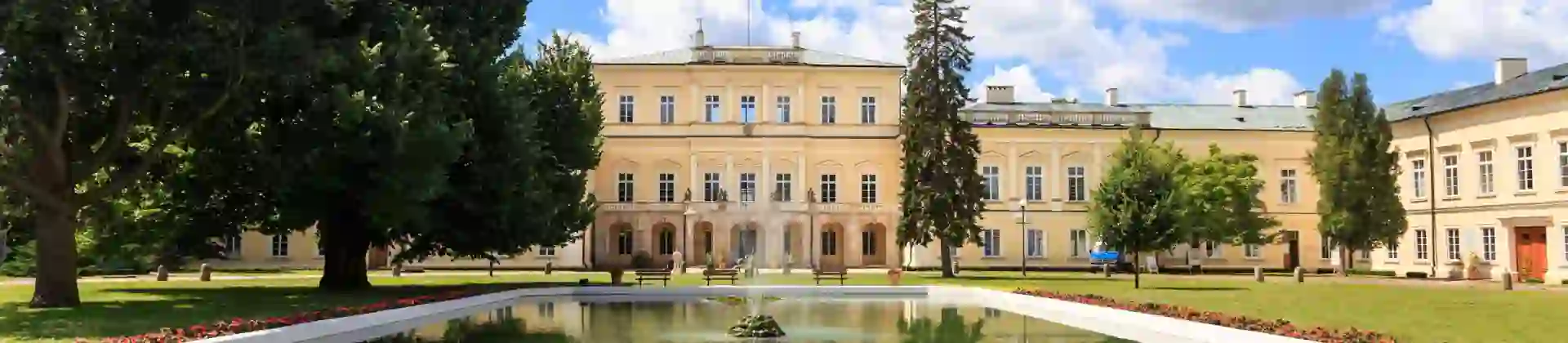
Poland Travel Guide
Discover Poland's rich history, diverse landscapes and vibrant cities
Poland: our destination guide
Poland blends castles, churches, and cities with Baltic beaches, snow-capped mountains, and sprawling countryside - making it a must-go destination whether you travel for history and culture, outdoor experiences, or anything in between.
If you want to learn more about this fascinating country, or are looking to expand your trip with some self-led excursions, this guide highlights the best places to visit in Poland, the top things to see and do, when to go, and how to travel comfortably and confidently while you’re there.
Must-see highlights of Poland
- Wawel Castle, Kraków
- Wieliczka Salt Mine
- Auschwitz-Birkenau Memorial
- Białowieża Forest
Discover the best of Poland stress-free with Newmarket Holidays escorted tours.
Places to visit in Poland
Poland is full of memorable cities, scenic landscapes, and cultural landmarks. Below, you’ll find some of the most rewarding things to do in Poland, from historic centres and peaceful forests to waterfront walks and UNESCO-recognised sites.
When you travel using a Newmarket Holidays guided tour - the planning, preparation and leg work is all taken care of, leaving you with more time to enjoy the experiences provided. You can find more information about what is included in our tours on our Poland tours and holidays page.
Kraków (Lesser Poland / Małopolska)
Ideal for holidays in April-June, or September-October, Kraków pairs architectural heritage with a relaxed cultural atmosphere.
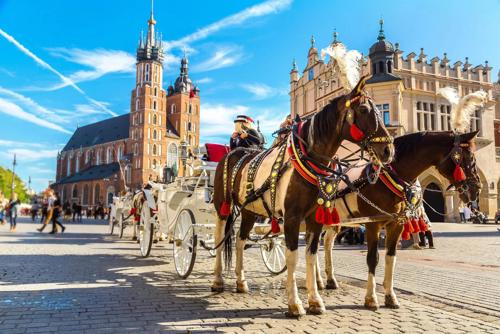
Its Old Town, Wawel Castle, and the riverside paths form the heart of the city, while the Jewish Quarter adds character and history. Museums, cafés, and compact streets make it an easy place to explore at a comfortable pace.
 |
 |
Top things to do in (and near) Kraków
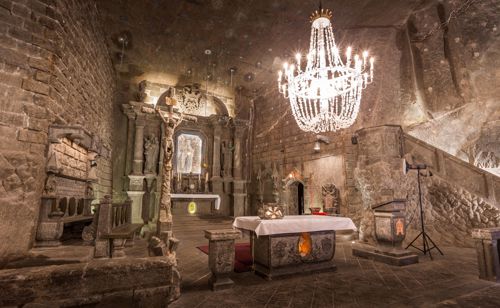
Wieliczka Salt Mine - make sure to carve out around 2-3 hours of your trip to visit this remarkable underground world carved entirely from salt, with chapels, chambers, and sculptures recognised by UNESCO.
Accessibility: Lift to the surface; some uneven ground
Included in our Spirit of Kraków tour.
Auschwitz-Birkenau Memorial & Museum - leave half a day to a full day free to explore a thoughtful and respectful insight into one of the most significant chapters of 20th-century history at this preserved site.
Accessibility: Step-free access in selected areas; surfaces vary
Included in our Spirit of Kraków tour.
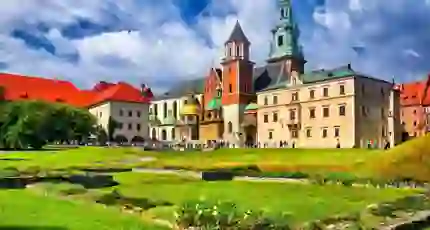
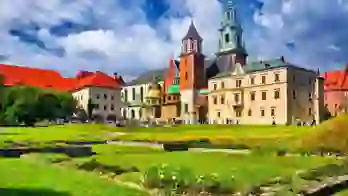
Wawel Castle, Kraków - history enthusiasts should set aside half a day to a full day of their trip to visit Poland’s former royal seat stands above the Vistula with chapels, courtyards, and centuries of art and architecture.
Accessibility: Step-free routes available; towers require stairs
Included in our Spirit of Kraków tour.
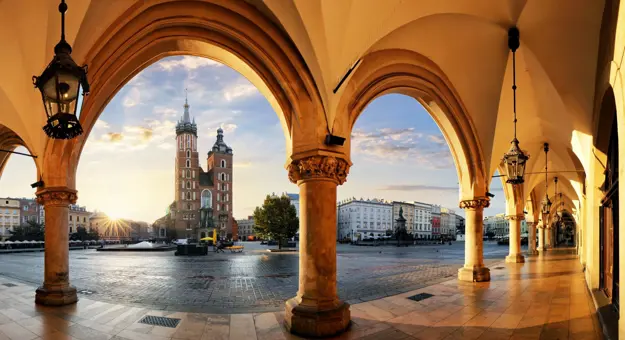
St Mary’s Basilica, Kraków (the Mariacki Church) - one of Kraków’s most distinctive landmarks, St Mary’s Basilica, can be fully explored in around an hour. The Mariacki Church stands on the edge of the Market Square and is known for its twin towers and richly decorated interior.
Accessibility: Step-free entrance available; interior chapels may have narrow thresholds
Included in our Spirit of Kraków tour.
Kazimierz, Kraków’s Jewish Quarter - if you have a half day to spare, visit this lively district of synagogues, cafés, and independent galleries that reflect both Jewish heritage and modern culture.
Accessibility: Mostly flat; steps in some historic sites.
Warsaw (Mazovia Region)
Best visited in May-September, Warsaw was rebuilt after the Second World War, blending restored palaces with contemporary towers, broad parks, and modern museums.
With rail links across the country, Warsaw is an excellent base for exploring more of Poland including Kraków, Gdańsk, and Poznań.
 |
 |
Top things to do in (and near) Warsaw
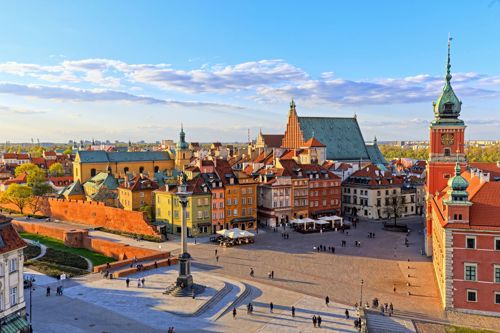
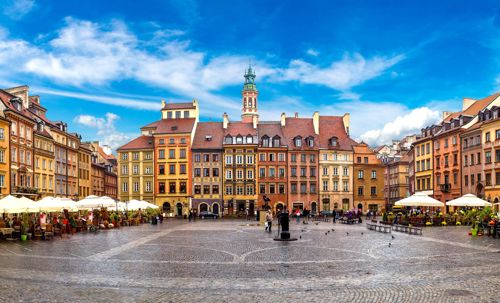
Warsaw Old Town - spend a day exploring the charming cobblestone streets, visit the royal castle, and see the reconstructed historic architecture.
Accessibility: Mixture of paved walkways with tactile paving and uneven cobblestone streets.
Białowieża Forest - for nature lovers, half a day to a full day should be enough time to experience this UNESCO-protected woodland, home to European bison and centuries-old trees.
Accessibility: Mixture of boardwalks and uneven forest routes.
Chełm Chalk Tunnels - leave a day free to take the train from Warsaw to Chelm, explore the city, visit the Basilica and enjoy a guided walk through chalk-cut corridors beneath Chełm, known for their distinctive pale walls.
Accessibility: Level floors; some narrow passages.
Gdańsk (Pomerania & the Baltic Coast)
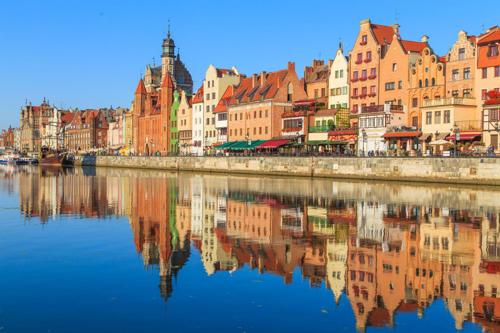
Visit in June-August to experience the busy streets and a bustling centre, or opt for a quieter trip in May and September. Gdańsk is a historic port with characteristic Hanseatic façades, maritime traditions, riverside walks, and landmarks linked to 20th-century history.
 |
 |
Top things to do in (and near) Gdańsk
Gdańsk Old Town & the Baltic Coast - leave a full day to traverse the old town, amidst the colourful Hanseatic façades, maritime museums, and waterfront paths linking to beaches in Sopot and Gdynia.
Accessibility: Flat streets with cobbles; accessible riverfront.
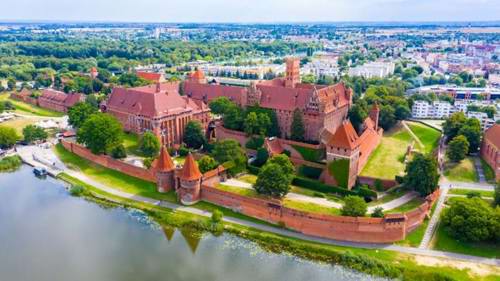
Malbork Castle - half a day to a full day should be spent viewing this vast red-brick Teutonic stronghold, regarded as the largest castle complex of its kind in Europe.
Accessibility: Flat exterior areas; interior staircases.
Masurian Lakes (Mazury Region) - outdoor enthusiasts will need to carve out one to two days to fully immerse themselves in this landscape of more than 2,000 lakes surrounded by forests, ideal for gentle boating, kayaking, or lakeside walks.
Accessibility: Mostly flat, with ramped access at many docks.
Our Poland tours
- Enjoy a guided tour of Poland’s stunning former royal capital
- Don’t miss the stunning Mariacki church
- Visit poignant, sobering Auschwitz-Birkenau
- Flights included
5 days from £549 pp
was £645 pp
Dates Available
May 2026 - November 2027
Duration
5 days
Depart From
15 airports
Excursions & Visits
3 included
Meals
4 included
- Enjoy a guided tour of Poland’s stunning former royal capital
- Don’t miss the stunning Mariacki church
- Visit poignant, sobering Auschwitz-Birkenau
- Flights included
7 days from £943 pp
was £1,109 pp
Dates Available
June 2026 - November 2027
Duration
7 days
Depart From
9 airports
Excursions & Visits
4 included
Meals
6 included
Food in Poland
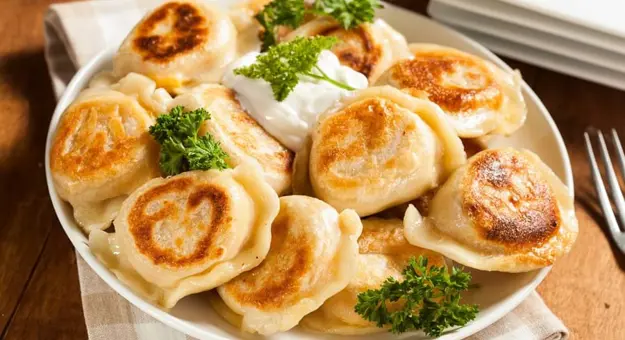
Polish cuisine is often associated with pickling, their mix of cucumbers and cabbage known to English speakers as sauerkraut, however Polish food is predominantly made up of hearty, rich, meat heavy comfort food. Portions are generous, flavours are warming, and seasonal ingredients shape much of what appears on the table.
Historic milk bars (bar mleczny) offer simple, good-value meals in a canteen-style setting and are ideal for trying classic Polish dishes without fuss.
Street markets sell grilled snacks, freshly baked breads, and regional cheeses like oscypek, while cafés and bakeries provide relaxed spaces for coffee and pastries.
Restaurants across the country range from traditional kitchens serving long-established recipes to modern dining rooms where chefs give familiar flavours, such as bigos - also known as hunters stew, a contemporary twist.
Getting around Poland
Poland’s transport network is straightforward and well connected, the main public transport methods are:
Airports
The main international airports include Warsaw Chopin, Kraków, Gdańsk, Wrocław, and Katowice, each with reliable public transport links.
Rail
PKP Intercity trains connect major cities, with a mix of faster ‘express’ trains and slower regional trains that allow for views of rural landscapes.
If accessibility is a concern, large stations usually have lifts, clear signage, and step-free access.
Coaches and buses
Long-distance services run frequently on main routes.
Best time to visit Poland
Poland has four distinct seasons, each offering a different experience for travellers. Spring and autumn tend to be the most comfortable for sightseeing, while summer brings long days and warm temperatures. Winter is cold and often snowy, particularly away from the coast.
Spring
Spring arrives gradually, with March often feeling like an extension of winter. Temperatures can swing between sub-zero mornings and mild afternoons, and the first signs of greenery begin to appear. April is known for its unpredictable weather and by May, the weather becomes more settled, offering longer days, warmer temperatures, and a noticeable shift towards early summer.
Summer
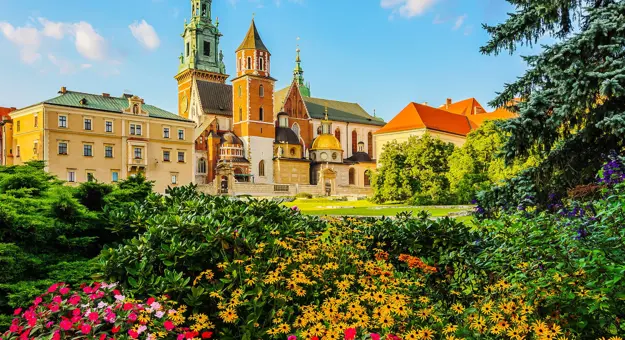
June is generally warm without being too hot, July and August are the warmest months, and temperatures can reach 25°C or more, especially in the south and around Kraków. This period also brings the highest chance of rain, with short, sharp thunderstorms common inland and near mountain areas.

Autumn
September and early October boast mild weather, changing landscapes, and fewer crowds. Later in October, temperatures begin to fall, and by November the weather becomes noticeably cooler, greyer, and wetter.
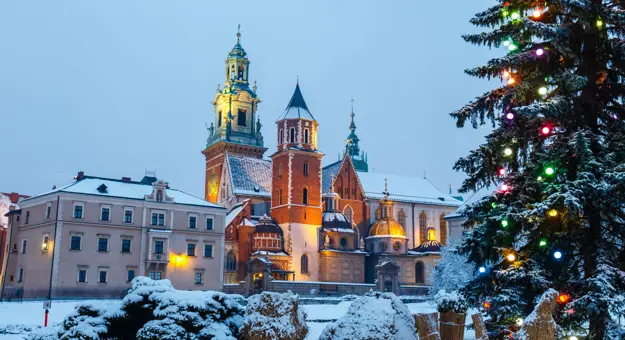
Winter
December and January are the chilliest months, and January typically sees average temperatures around -4°C, with snow common inland and in the mountains. February remains cold and often dry, and warm clothing is essential for comfort.
Month-by-month weather guide
- January: Coldest month, snow common. Avg: -3-2°C.
- February: Very cold, shorter days. Avg: -2-3°C.
- March: Cold mornings, slow thaw. Avg: 1-8°C.
- April: Milder, early spring blooms. Avg: 5-14°C.
- May: Pleasant and green, ideal for sightseeing. Avg: 9-20°C.
- June: Warm, long days. Avg: 13-23°C.
- July: Warmest month, occasional storms. Avg: 15-25°C.
- August: Warm, slightly humid. Avg: 14-24°C.
- September: Cool and crisp, start of autumn. Avg: 10-19°C.
- October: Colourful foliage, cooler air. Avg: 6-13°C.
- November: Grey, chilly, early snow possible. Avg: 2-7°C.
- December: Cold, festive lights, snow likely. Avg: -2-3°C.
Sources: Poland Travel / Poland on Bike / AI Overview
Accessibility & comfort in Poland
Poland’s major cities have made clear progress when it comes to accessible travel options, train stations usually have step-free access, lifts, and tactile paving near the tracks. Larger hotels provide adapted rooms, museums are often fitted with level entrances, lifts and public areas have an increasing number of ramps and accessible toilets.
Essential info for Poland
Poland’s Currency
The local currency is the Polish złoty (PLN). While major credit and debit cards are accepted widely, cash can still be useful for small purchases, market stalls and rural areas. Card payments are processed in złoty and may be subject to your bank’s conversion fees.
Tipping in Poland
Tipping is optional, but it’s common to round up the bill or leave around 10% for good service, much like in the UK.
Plugs in Poland
Poland uses Type E plugs, and Type C two-pin European plugs also fit most sockets (220-240 volts). A standard European adaptor will work for UK appliances. For days spent sightseeing, a portable power bank is useful, especially if you plan to take photos or use map apps frequently.
Safety in Poland
Poland is generally considered safe and has low crime rates in its major cities. As with any urban area, take usual precautions in busy places, keep valuables secure, and avoid poorly lit backstreets late at night. Roads and pavements can be slippery in winter, so suitable footwear is helpful if you’re travelling during colder months.
Emergency services: Dial 112 for police, ambulance, or fire services.
Useful phrases in Poland
A few Polish words and phrases can make day-to-day interactions smoother, especially in cafés, markets, and smaller shops. Polish pronunciation may look challenging at first, but many of the most helpful expressions are short and easy to use.
Cześć (cheshch) - Hi / Hello (informal)
Do widzenia (doh veed-ZEN-yah) - Goodbye
Dziękuję (jen-KOO-yeh) - Thank you
Proszę (PROH-sheh) - Please / You’re welcome
Przepraszam (psheh-PRAH-sham) - Excuse me / I’m sorry
Czy mówi Pan/Pani po angielsku? (chih MOO-vee pan/pah-nee poh ang-YEL-skoo) - Do you speak English?
Rachunek, proszę. (rah-KOO-nek PROH-sheh) - The bill, please
Ile to kosztuje? (EE-leh toh kosh-TOO-yeh) - How much does it cost?
If you remember just dziękuję and proszę, you’ll already be using two of the most common and appreciated words in Polish.
FAQs
Discover our blog
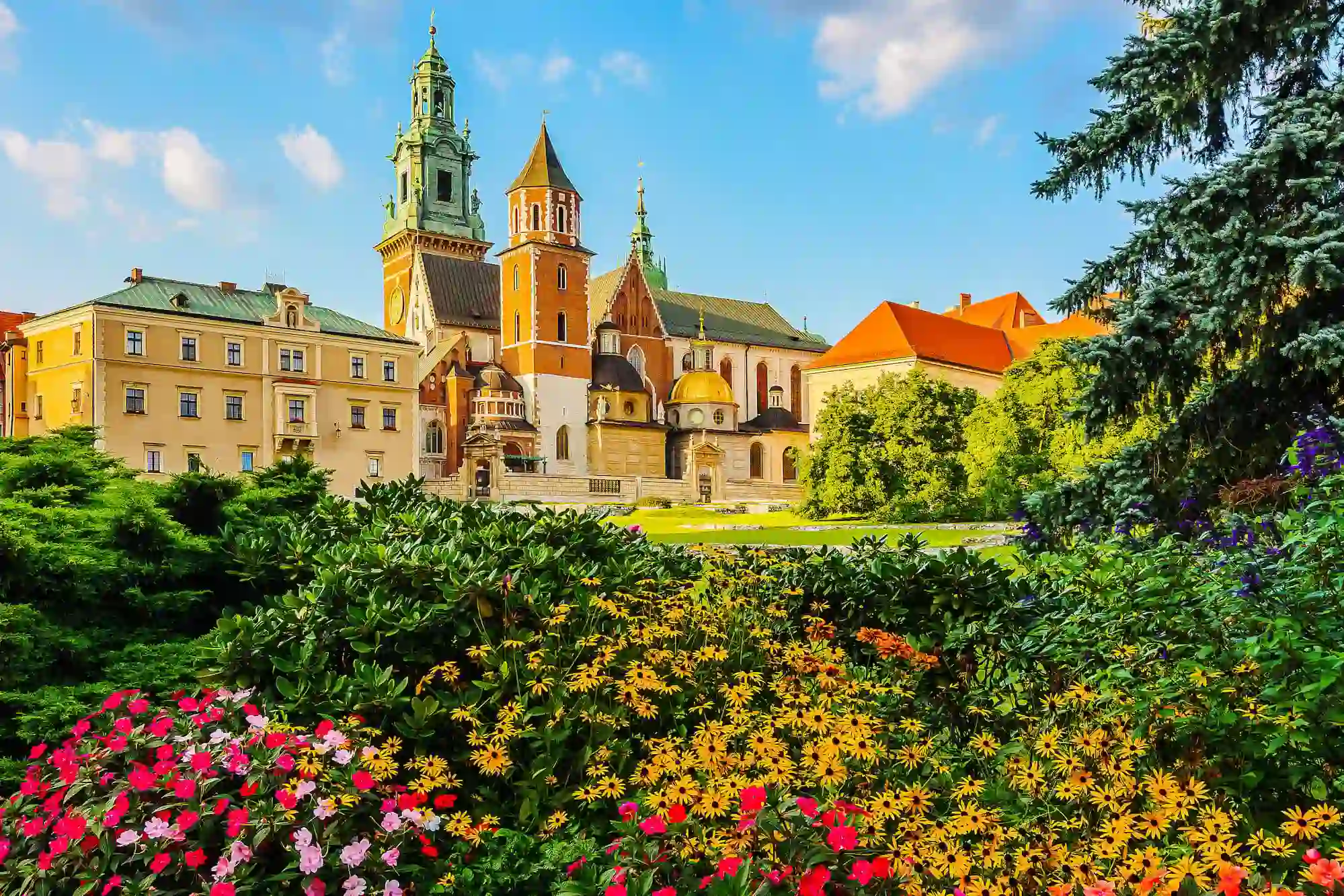
How exploring Krakow helped me understand my heritage
Follow in the footsteps of one of our customers, Linda, in historic Kraków, and find out what she thought of each day of our escorted tour.

Staff stories: the ancient salt mines of Krakow
Take a peek at the UNESCO listed old town of Krakow, as well as its unique salt mine that plunges deep underground.

Must-try traditional food and drink at Europe's Christmas markets
From sugary rolled dough to bitters from the 18th century - you are sure to feast like royalty this festive season.