
Norway Travel Guide
Discover endless natural splendours, colourful towns and unforgettable views around every corner.
Norway: our destination travel guide
Few destinations feel as quietly impressive as Norway. Here, deep-blue fjords carve through towering cliffs, waterfalls tumble from snow-dusted peaks, and small communities sit peacefully along the water’s edge. It’s a place where journeys matter as much as the destinations themselves – whether by scenic rail, fjord cruise, or comfortable coach.
For many travellers, Norway offers the ideal balance between extraordinary landscapes, thoughtfully paced travel, and a sense of ease that comes from well-planned routes and expert guidance. You’ll experience iconic sights without the need to navigate complex travel arrangements, making it especially appealing for a first visit.
From colourful harbour cities to glacier-carved valleys, Norway rewards those who prefer to explore at a relaxed pace, with time to take in the views rather than rush through them.
Quick highlights: must-see places in Norway
- Oslo – a modern waterfront capital with museums, galleries, and striking architecture
- Bergen – a historic harbour city known for its colourful wooden buildings
- Nærøyfjord – a UNESCO-listed fjord with dramatic, narrow passages
- Balestrand – a peaceful fjordside village with a slower pace of life
- Jostedalsbreen – mainland Europe’s largest glacier, surrounded by mountain scenery
Discover Norway’s highlights in comfort with Newmarket Holidays escorted tours.
Places to visit in Norway
Norway may look vast on a map, but travelling through it feels surprisingly manageable. Escorted touring brings together the country’s most impressive regions, from vibrant cities to remote fjord landscapes, in a way that feels seamless and well-paced.
You’ll find a variety of experiences across relatively short distances, from harbour towns and glacial viewpoints, to winding mountain roads and quiet villages where life moves at a gentler rhythm.

Bergen – gateway to the fjords
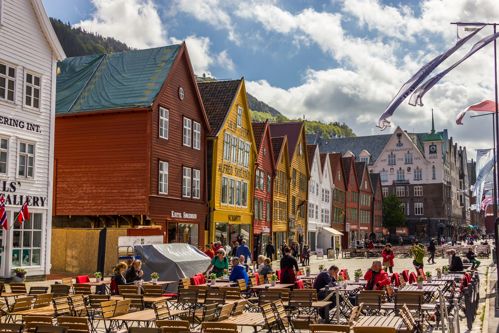
Often described as Norway’s most charming city, Bergen combines history with a relaxed coastal atmosphere. Its UNESCO-listed Bryggen Wharf is lined with colourful wooden buildings, while nearby viewpoints offer sweeping views across the harbour.
Best for: culture, history, and easy access to fjord scenery
Included on: The Beautiful Fjords of Western Norway

The Norwegian Fjords (Fjord Norway)
Norway’s defining landscape, the fjords are long, narrow inlets framed by steep cliffs and waterfalls. Travelling through them – whether by boat or along scenic roads – is one of the most memorable parts of any visit.
Best for: scenery, photography, and relaxed exploration
Included on: The Beautiful Fjords of Western Norway

Jostedalsbreen glacier region
This vast glacier is the largest in mainland Europe, surrounded by dramatic peaks and valleys. Even from a distance, its scale is striking, and the surrounding national park offers some of Norway’s most impressive natural viewpoints.
Best for: dramatic landscapes and glacier views
Included on: The Beautiful Fjords of Western Norway

Western Norway
With its combination of fjords, waterfalls, and coastal towns, Western Norway is often considered the country’s most scenic region. It’s where many escorted tours are focused, offering a mix of gentle sightseeing and unforgettable views.
Best for: dramatic fjord landscapes, scenic touring, and relaxed exploration
Included on: The Beautiful Fjords of Western Norway
Our Norway holidays


- Discover the region on a fascinating 'Fjord Life' tour
- Experience a warm welcome, stunning scenery and beautiful views
- Tour Norway's interior on unforgettable optional excursions to the Jostedal Glacier, and to Myrdal, Flam and Gudvangen
-
Flights included
8 days
from £1,687 ppwas £1,875 pp -
Dates Available
April 2027 - October 2028
-
Duration
8 days
-
Depart From
14 airports
-
Excursions & Visits
3 included
-
Meals
14 included


- Stay in an historic hotel in the heart of the fjords
- Enjoy panoramic views from the Stegastein Viewing Platform
- Ride the famous Flåmsbana Mountain Railway
-
Flights included
6 days
from £2,074 ppwas £2,305 pp -
Dates Available
22 December 2026
-
Duration
6 days
-
Depart From
9 airports
-
Excursions & Visits
3 included
-
Meals
10 included
Top things to do in Norway
Many of Norway’s most memorable experiences are included within escorted tours, while others can be enjoyed during time at leisure. As always, it’s worth checking individual itineraries, as free time and inclusions can vary.
1. Explore Bryggen Wharf, Bergen (UNESCO)
Overview: Bergen’s historic harbourfront is one of Norway’s most famous sights, with colourful wooden buildings, small museums, shops and cafés.
Time Needed: 1–2 hours
Estimated Cost: Free (optional museum entry varies)
Accessibility: Mostly flat walking, though some areas have uneven surfaces and narrow lanes.
Featured In: The Beautiful Fjords of Western Norway
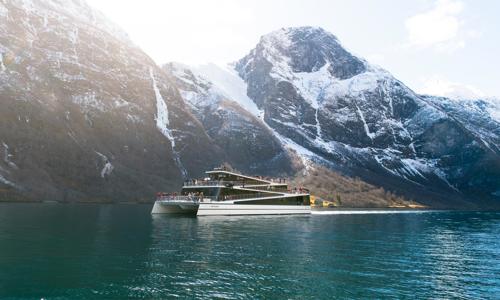
2. Take a fjord cruise
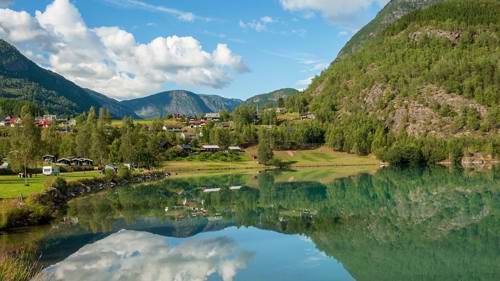
Overview: A fjord cruise is one of the most relaxing ways to experience Norway’s scenery, offering views of waterfalls, cliffs and peaceful shoreline villages.
Time Needed: 1–3 hours (varies by route)
Estimated Cost: Often included on tours; standalone cruises vary by location and season
Accessibility: Many cruise boats offer step-free boarding, but this varies by operator and pier.
 |
 |
3. Ride the Flåm Railway (where available)
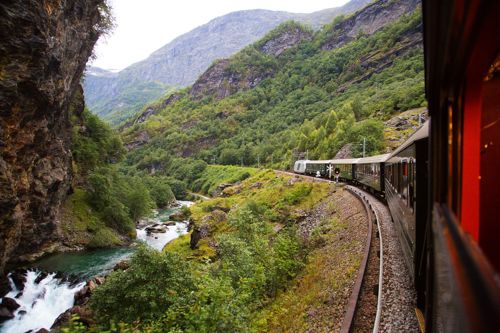
Overview: One of Europe’s most scenic rail journeys, travelling through steep valleys and mountain landscapes, with waterfalls and panoramic viewpoints.
Time Needed: Around 2 hours return
Estimated Cost: Varies by season and route; often included on selected itineraries
Accessibility: Stations are generally accessible; assistance may be available if arranged in advance.
4. Enjoy a scenic drive through Fjord Norway
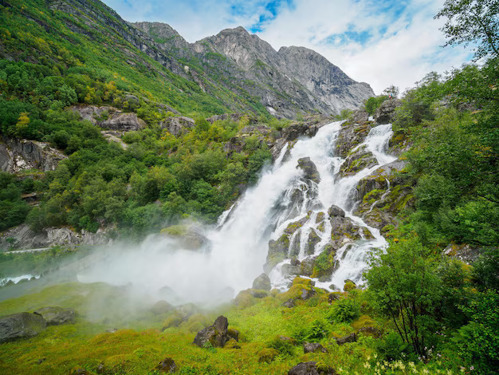
Overview: Norway’s scenic touring routes are a highlight in themselves, with comfortable coach travel offering mountain passes, fjord viewpoints and waterfall stops.
Time Needed: 1–3 days across a tour itinerary
Estimated Cost: Included on escorted tours
Accessibility: Excellent for travellers who prefer sightseeing by coach with comfort breaks.
 |
 |
5. Cruise the UNESCO-listed Nærøyfjord
Overview: A fjord cruise is one of the most memorable ways to experience Norway, offering peaceful travel through towering cliffs, waterfalls, and traditional villages such as Gudvangen.
Time Needed: 1–3 hours
Estimated Cost: Included on our escorted tour
Accessibility: Many vessels offer step-free boarding, though this varies
Featured in: Christmas in the Norwegian Fjords
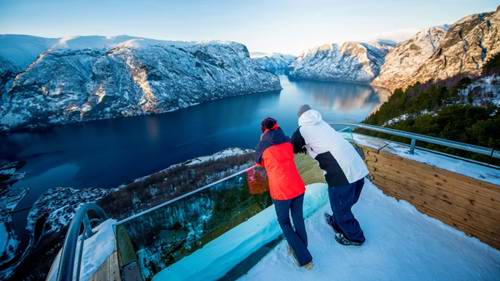
6. Take a gentle walk to a fjord viewpoint
Overview: Many fjord areas have accessible viewpoints or short walks that provide spectacular scenery without strenuous hiking.
Time Needed: 30 minutes – 2 hours
Estimated Cost: Free
Accessibility: Varies significantly; focus on viewpoints with parking and maintained paths.
 |
 |
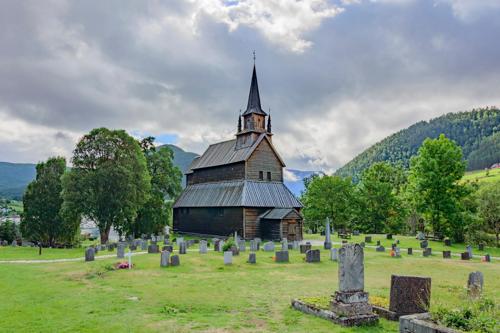
7. Visit a traditional stave church (where possible)
Overview: Stave churches are unique wooden medieval buildings found in parts of Norway, offering a glimpse into the country’s history and craftsmanship.
Time Needed: 30–60 minutes
Estimated Cost: Varies by site
Accessibility: Often involves steps and uneven ground; check the specific church access details.
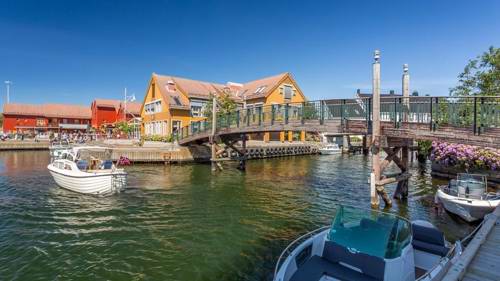
8. Experience Norway’s countryside villages and local life
Overview: A major appeal of escorted touring is seeing smaller places that you might not choose independently, with scenic stops and relaxed pacing.
Time Needed: Throughout the tour
Estimated Cost: Included
Accessibility: Excellent as a sightseeing-based experience.
 |
 |
Food & drink in Norway
Norwegian cuisine is far more varied and refined than it’s sometimes given credit for. Rooted in seasonal produce and shaped by the country’s coastline and landscapes, food here is typically fresh, simple, and thoughtfully prepared. Along the west coast, seafood is a highlight, while inland regions lean towards hearty, traditional dishes.
Dining out is generally relaxed and well-paced, with cafés offering comfortable places to pause during the day and restaurants ranging from casual bistros to contemporary Nordic kitchens in cities like Oslo and Bergen.
Some of Norway’s most distinctive dishes and drinks to look out for:
- Fresh salmon and seafood – widely regarded as some of the best in Europe
- Fish soup – often creamy, mild, and found across coastal regions
Kjøttkaker – traditional Norwegian meatballs served with potatoes and gravy - Reindeer stew – a regional speciality in some areas, rich but approachable
- Waffles with jam and sour cream – a popular café treat
- Brown cheese (brunost) – slightly sweet with a caramelised flavour
- Cloudberries – a seasonal delicacy often used in desserts
- Coffee – Norway is among Europe’s highest coffee-consuming nations
If you have specific dietary requirements, these can often be accommodated with advance notice. It’s worth flagging any needs at the time of booking so your tour manager and hotels can prepare.
Signature dishes by region
Norwegian cuisine reflects the country’s geography. Coastal regions are known for seafood, while inland and rural areas favour heartier dishes. Cities bring together both traditional and modern influences.
Bergen & the west coast: Fresh seafood dominates, including prawns, cod, and salmon. Fish soup is a staple, and cafés are known for baking, such as cinnamon buns and waffles.
Oslo & eastern Norway: A mix of modern Nordic dining and international cuisine, alongside traditional dishes like open sandwiches and kjøttkaker in relaxed restaurant settings.
Fjord Norway & rural areas: Hearty stews, local cheeses, and seasonal produce feature prominently, with fresh berries widely available in the summer months.
Vegetarian & plant-based dining
Vegetarian and plant-based options are widely available, particularly in cities and larger towns. Oslo and Bergen both have growing vegetarian scenes, and most hotel restaurants and cafés offer at least one or two lighter or meat-free options.
As with many traditional cuisines, some dishes may use meat-based stocks, so it’s worth checking with staff when ordering.
Safe street food & drinking water tips
Tap water is safe to drink throughout Norway, and refilling a bottle is common in hotels and public spaces. Street food is less prominent than in some European destinations but can be found in cities and at seasonal markets, where you’ll often see local produce and simple hot dishes.
Local dining etiquette
Dining in Norway is generally relaxed and unhurried, aligning well with the pace of escorted touring. Service is friendly but understated, and you’ll usually be given time to enjoy your meal without interruption.
Tipping is optional; rounding up or leaving a small amount is appreciated for good service. Booking ahead can be helpful in popular fjord towns during peak summer months.
Getting around Norway
Norway is straightforward to explore as part of an escorted tour, with all transport, transfers, and logistics arranged in advance. The country’s landscapes – fjords, mountains, and coastline – shape how you travel, meaning journeys are often as memorable as the destinations themselves.
Arrival airports
Oslo and Bergen are Norway’s main international gateways, with additional regional airports used depending on the itinerary. Newmarket Holidays departures are available from a range of UK regional airports on selected departures, allowing you to start your journey from closer to home.
Coach touring
Coach travel forms the backbone of most Norway escorted tours. It’s comfortable, fully guided, and removes the need to drive on unfamiliar mountain and fjord roads. Distances can be longer than they appear on a map, but routes are carefully planned with regular stops for viewpoints and breaks.
Rail travel
Norway’s rail network connects major cities and includes some of Europe’s most scenic routes. Rail journeys may be included on selected tours or offered as optional excursions. The Flåm Railway, where available, is one of the country’s most memorable journeys, travelling through steep valleys and past waterfalls.
Ferries and fjord crossings
Ferry travel is a normal and essential part of getting around Norway, particularly in fjord regions. Many routes rely on ferries to connect roads and communities, and crossings are often included within escorted tours. These journeys are typically smooth and offer some of the best views of the surrounding landscapes.
Multi-mode travel
Due to Norway’s geography, journeys often combine coach, ferry, and occasionally rail travel. This mix of transport is part of the experience, allowing you to see a wider range of landscapes without the need for complex planning.
Weather and travel conditions
Weather can occasionally affect travel times, particularly in mountainous and fjord areas. Routes are well managed, but conditions can vary, especially outside the summer months. Your tour manager will keep you informed of any adjustments, ensuring the journey remains comfortable and well organised.
The best time to visit Norway
Norway can be visited year-round, but the experience varies noticeably by season. The main factors to consider are daylight hours, temperature and rainfall, crowd levels, and the type of scenery you’re hoping to encounter. Late spring through early autumn tends to offer the most balanced conditions for touring, particularly in the fjord regions.
Spring (March–May):
Spring brings longer days, quieter attractions, and some of the most dramatic scenery of the year. As snow melts in the mountains, waterfalls are often at their most powerful, particularly in May.
Temperatures are cool but improving – typically around 4–12°C depending on location – and landscapes feel fresh and green. Late spring is widely considered one of the best times to visit Norway for fjord touring without peak-season crowds.
Summer (June–August):
The warmest months, with temperatures generally ranging from around 12–20°C, though coastal areas such as Bergen are often cooler.
Daylight is a defining feature – in much of the country, days stretch to around 18–20 hours, with even longer daylight further north.
This is the best time for fjord cruises, scenic drives, and rail journeys. July and August are the busiest months, particularly in popular fjord regions and cities.
Autumn (September–November):
Early autumn is a rewarding time to visit. September often brings mild conditions (around 10–15°C) and fewer crowds, along with the first autumn colours.
From October onwards, temperatures drop and rainfall increases, particularly along the west coast, where places like Bergen experience some of their wettest months.
November is noticeably quieter, with shorter days and more changeable weather, but it can still be appealing for those who prefer a slower pace.
Winter (December–February):
Winter transforms Norway into a landscape of snow-covered mountains and quiet fjords. Temperatures vary significantly by region, but in many coastal areas they hover around 0–5°C, while inland areas can be colder.
Daylight hours are short – in southern Norway you may have around 6 hours of daylight, while further north this drops even further.
This season is best suited to winter scenery and festive city breaks rather than extensive fjord touring.
Norway weather by month
Norway’s climate varies significantly by region. Coastal areas (such as Bergen) are milder but wetter, while inland areas (such as Oslo) are colder in winter and warmer in summer. Weather can change quickly, so layers are essential year-round.
| Month | Temp | Notes |
|---|---|---|
| January | -2 to 4°C | Coldest period; short daylight and winter scenery. |
| February | -2 to 5°C | Similar to January; crisp conditions. |
| March | 0 to 7°C | Early spring; improving daylight. |
| April | 3 to 10°C | Brighter days and more stable conditions. |
| May | 7 to 15°C | One of the best months for fjord scenery; waterfalls at their peak. |
| June | 10 to 18°C | Long daylight hours; excellent for touring. |
| July | 12 to 20°C | Warmest month; busiest period. |
| August | 11 to 18°C | Still warm; slightly quieter later in the month. |
| September | 8 to 15°C | Good balance of weather and fewer crowds. |
| October | 4 to 10°C | Cooler, with autumn colour and increased rainfall. |
| November | 0 to 6°C | Cooler, quieter, shorter days. |
| December | -1 to 5°C | Festive atmosphere; winter conditions developing. |
Accessibility & comfort in Norway
Norway is a rewarding destination for older travellers and those with mobility considerations, though it’s worth being aware of a few practical points before you travel. The country’s landscapes are a key part of its appeal, and in some areas this naturally brings slopes, steps, and uneven terrain.
Fjord towns and villages are often set along steep hillsides, and streets can include inclines, cobbled sections, or uneven paths. Attractions such as viewpoints, traditional stave churches, and some natural sites may involve steps or short walks on gravel or uneven ground. Comfortable, supportive footwear is strongly recommended, along with layered clothing and a light waterproof jacket, as weather conditions can change quickly.
Travelling by coach significantly reduces the amount of walking required, as it brings you close to key sights and scenic viewpoints. Many fjord cruises and ferries offer step-free boarding or assistance, though this can vary depending on the harbour and vessel. In cities such as Oslo and Bergen, museums, public buildings, and many visitor attractions are generally accessible.
Hotels on Newmarket Holidays tours typically include lifts and offer accessible rooms, although availability can vary by property and location. In more rural or fjord areas, some hotels may have limited accessibility due to their setting.
It’s well worth discussing any mobility requirements at the time of booking, so that your tour manager and the Newmarket Holidays team can plan accordingly and ensure the most comfortable experience possible.
Essential information for Norway
Norway’s currency and card payments
Norwegian krone (NOK) – Norway does not use the euro. Card payments are widely accepted across the country, including contactless, and cash is rarely needed for everyday purchases. ATMs are available in cities and larger towns if required.
Tipping in Norway
Tipping is optional and never expected. In restaurants where service is not included, rounding up the bill or leaving a small amount is appreciated for good service. In cafés and bars, tipping is less common, though rounding up is always welcomed.
Plugs in Norway
Norway uses European plug types C and F (two-pin). UK travellers will need an adaptor.
Local phrases
Norwegian is the official language, though English is widely spoken throughout the country. Learning a few simple phrases can still be helpful and appreciated:
- Hei (pronounced hay) – hello
- God morgen (pronounced goo mor-gen) – good morning
- Takk (pronounced tahk) – thank you
- Vær så snill (pronounced vair soh snill) – please
- Ja (pronounced yah) – yes
- Nei (pronounced nay) – no
- Unnskyld (pronounced oon-shyld) – excuse me
- Snakker du engelsk? (pronounced snak-er doo eng-elsk) – do you speak English?
FAQs
Discover our blog

Cool-cationing: The best spots for a milder summer getaway
Discover cooler summer holiday destinations with mild climates, perfect for sightseeing, family trips and relaxing escapes from the summer heat.

The best destinations for female solo travellers
To celebrate Women’s History Month, make lasting memories of your own with a wish-list trip to one of these solo-friendly hotspots.

The best European hotspots to explore in 2026
While Europe is home to spectacular sights, some spots stand out from the rest. From the dramatic Norwegian fjords to the beautiful Douro Valley, we’ve rounded up the top European travel destinations for 2026.